
Faith and Society

  • National purpose, public trust, and strategic clarity key to a resilient Pakistan, say experts

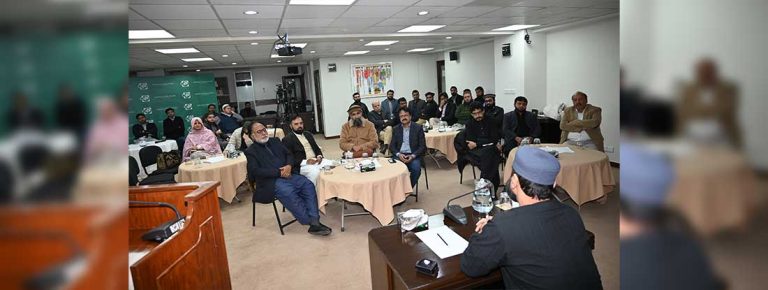
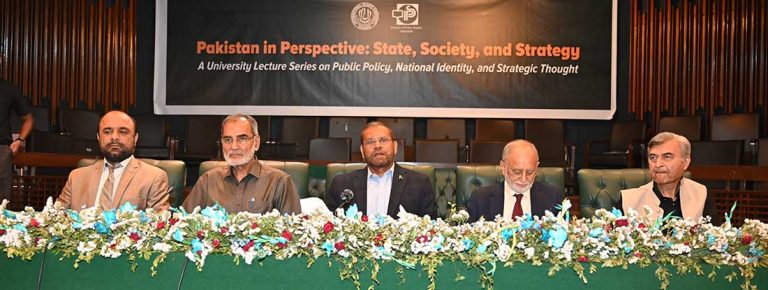
    Pakistan’s contemporary challenges and emerging opportunities require renewed focus on national identity, governance, institutional development, public trust, and strategic vision in order to build a cohesive and resilient future. In this context, intellectual engagement, civic responsibility, and constructive dialogue remain essential for addressing national issues and understanding Pakistan’s evolving position in the regional and global environment. This emerged as the central theme during the inaugural lecture of a 12-part series…
  • Modern challenges facing Muslim societies require paradigm shift in thinking: IPS discussion

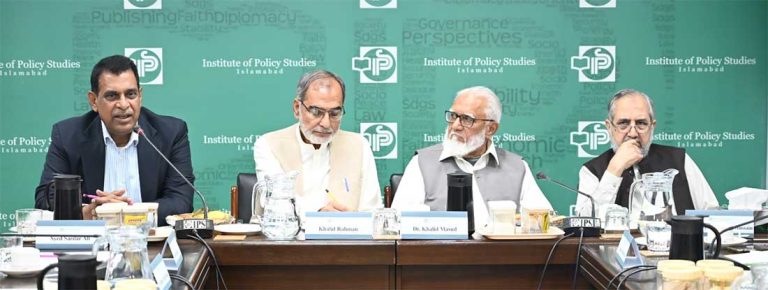
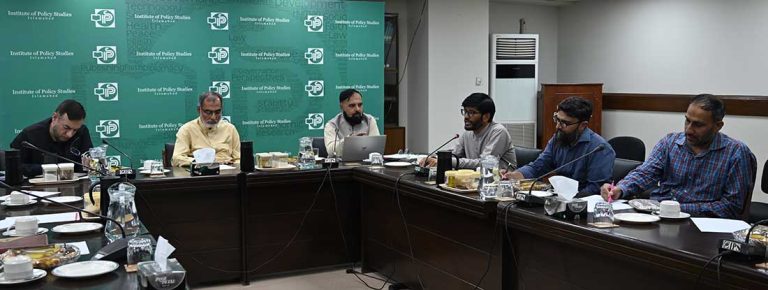
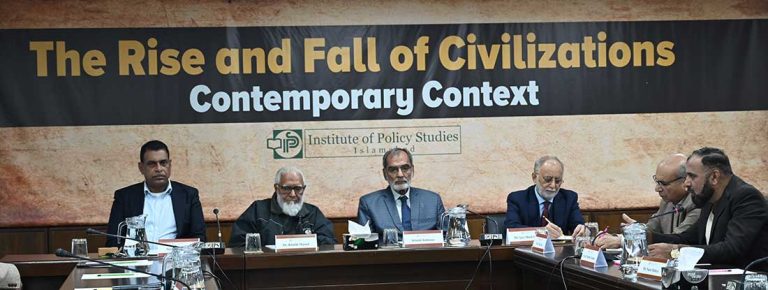
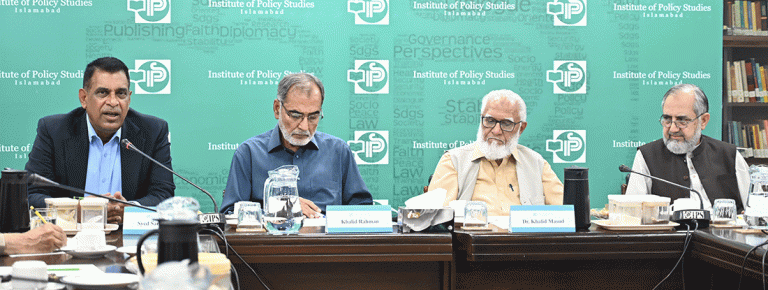
    The challenges posed by the modern industrial world to Muslim societies cannot be addressed through nostalgia for the past, piecemeal reforms, or resistance to change alone. Rather, they demand a fundamental transformation in intellectual outlook, institutional development, and approaches to governance and progress. These views emerged during the third and last session of the discussion series titled “The Rise and Fall of Civilizations: Contemporary Context,” held at the Institute of…

  • Eroding compliance with humanitarian law highlights need for stronger role of religious communities, say experts

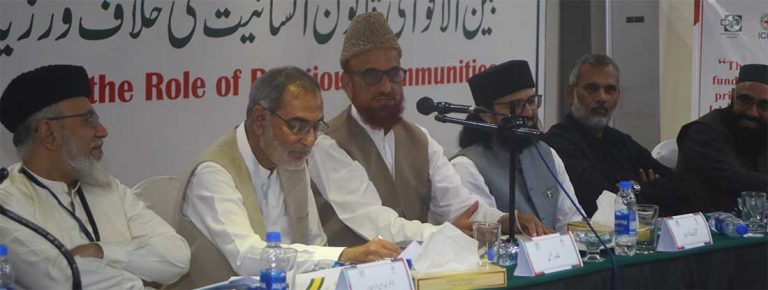
    The increasing disregard for international humanitarian law (IHL) in contemporary conflicts is prompting renewed calls to strengthen ethical frameworks and expand the role of religious communities in upholding humanitarian principles. Experts stressed that religious traditions — particularly Islamic teachings — offer valuable guidance for protecting human dignity, regulating conduct during war, and ensuring accountability. The aforementioned observations were discussed at a conference titled “Eroding Compliance of IHL and the Role…

  • Modernization without indigenous identity leaves nations at crossroads: IPS discussion

    Sustainable modernization demands the ability to reconcile progress with indigenous identity, historical experience, and societal realities. Across the last three centuries, many non-European societies sought to bridge the gap with the West in power and prosperity, yet only a limited number succeeded in building enduring models of development. For countries like Pakistan, these historical experiences offer important lessons on how modernization can be pursued without losing cultural confidence or national…

  • Experts call for pausing NCF 2026 finalization to ensure indigenous grounding and policy coherence

    Ensuring that national curriculum development reflects indigenous values, constitutional principles, and educational realities is central to building a coherent and future-oriented education system. In Pakistan, curriculum reform requires not only periodic revision but also a clearly articulated policy foundation, inclusive stakeholder engagement, and alignment with national ideological and social priorities. These concerns emerged during a consultative meeting titled “National Curriculum Framework 2026: A Review,” hosted by the Institute of Policy…

  • Understanding the rise and fall of civilizations requires critical engagement with changing realities: IPS discussion

    The rise of Western civilization, as opposed to the rest, signifies the emergence of a qualitatively new type of civilization marked by distinct cultural, scientific, and political transformations. Contemporary debates on modernity must move beyond economic metrics and address deeper moral and civilizational questions, including balance, values, and intellectual responsibility. These reflections emerged during a discussion session titled “The Rise and Fall of Civilization: Contemporary Context” at the Institute of…

  • Grounding modern thought in revelation and Islamic intellectual tradition necessary: IPS workshop

    Decolonization of knowledge is not a call to reject modernity or retreat into an imagined pre-colonial past; rather, it is an intellectual project aimed at reclaiming Islamic perspectives by grounding contemporary thought in divine revelation. It engages with the contemporary contexts through the rich, argumentative tradition of Islamic scholarship. This was emphasized by Dr Ovamir Anjum, a renowned scholar and the Imam Khattab Chair of Islamic Studies in the Philosophy…

Back to top