
CPEC to help boost Pakistan’s agriculture sector; fulfill food security needs: Experts
CPEC is improving Pakistan’s connectivity not only within itself and China, but with over 60 other BRI countries as well. With the second phase of the Chinese venture presenting opportunities to collaborate in the social sector, substantial emphasis needs be laid on the development of the country’s agriculture sector, which offers huge prospects of growth and trade.
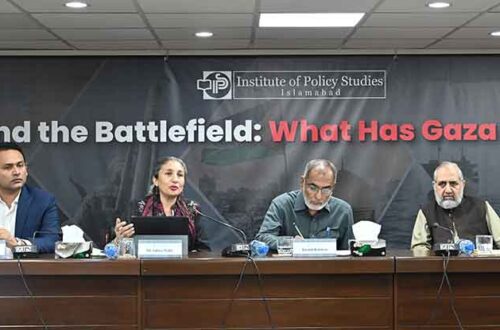
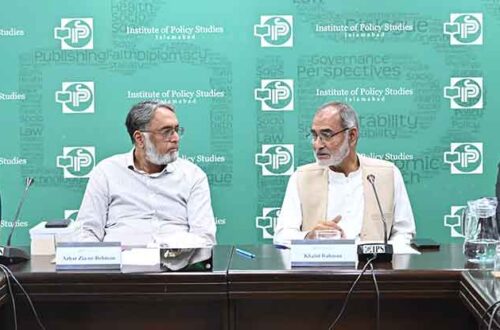
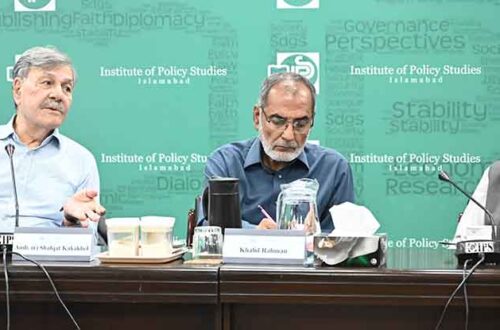
The message emerged from a policy dialogue ‘National Agriculture and Food Security in Pakistan’, which was held at Institute of Policy Studies (IPS), Islamabad in collaboration with Pakistan Agriculture Scientists Forum (PAS Forum) on January 25, 2020. The session was addressed by Dr Muhammad Azeem Khan, chairman, Pakistan Agricultural Research Council (PARC); Professor Dr Anwar-ul-Hasan Gilani, vice chancellor, University of Haripur and ex-chairman, Pakistan Council for Science and Technology (PCST); Professor Dr Amanullah Malik, University of Agriculture, Faisalabad; Khalid Rahman, Executive President IPS; and Dr Abdul Wakeel, president, PAS Forum.
Presenting an overview of Pakistan’s agriculture sector, Dr Azeem Khan emphasized the need of enhancing productivity of various potential sub sectors of agriculture, not only with an aim to address the country’s food security concerns, but also to alleviate it for international trade.
Khan rued that Pakistan was a food exporting country till 2013 but became a food importing country thereafter. However, he observed that the second phase of China-Pakistan Economic Corridor offers a good opportunity to help the agriculture sector to recover, but the onus largely lies with the nation to set targets and strategies carefully in order to benefit from the forthcoming opportunities.
The PARC chairman was all for alleviating the agriculture sector via business-oriented model, which in his opinion, could only be done through value addition i.e. converting raw materials into standard commercial products and brands. He highlighted that combinations of different commodities and products being produced alongside the CPEC routes boast significant prospects in this regard. There is a huge potential for the production and export of fodder, edible oils and palm oil, whereas pulses and oil seeds are some other lucrative areas to invest in.
The speaker however pointed out that the post-harvest losses still remain a concern in the country, before adding that the solution lies in careful measures taken in the areas of production, diversification, post-harvest handling, processing, certification, and value addition – all aimed at converting the harvest into high-value products while enabling them to maintain apex standards for international trade.
Khan also spoke fervently about the prevalent state of malnutrition in Pakistan, terming it unprecedentedly high while maintaining that a nutritionally food secure Pakistan should be the country’s top most goal.
Dr Malik spoke about potentials and opportunities for Pakistan’s agricultural sector in relevance to CPEC mega projects. He mentioned several agriculture items in which Pakistan could enjoy a competitive advantage over the rest of the world, especially when it comes to China.
The professor said that China is the world’s biggest farm produce importer, with its imports making up to 10 % of global farm produce trade. The country is a net importer of bulk agriculture products and there has been rapid growth in its imports from Belt and Road countries off-late. Pakistan too can target some of its exports to China such as soybean, barley, corn, wheat and cereals. Rice is the country’s major export to China but there is a lot more potential to it as well. In terms of fruit, cherries, grapes, mangoes, guavas and oranges are some of the products that can be looked at. He however added that about 70% of China’s agriculture imports come from the USA, Brazil, South East Asia, European Union and Australia, and it will be very challenging, yet necessary, to raise our quality standards to compete with these countries.
Pakistan was sorely lacking in utilizing technology for its agricultural requirements when compared to other countries, Dr Gilani lamented while pressing for the need to make use of modern technological systems and methods that could cope with present-day challenges like global warming and climate change.
The speaker stressed focusing and investing on local capacity building initiatives as well as on improving access to international markets. He urged immediate measures such as making crops nutritive and resilient to climate change, rescuing of more farmland, empowering of small landholders, de-urbanization, preservation of water, recycling of crop/livestock waste and saving of food through public awareness drives if Pakistan is to answer its rising food security threats.
The Biggest Problem of Pakistan is its people are Liar (Cheater) and always looking for False Short-cuts (for real short-cuts one makes inventions, innovations, improvement in process or system etc.). Having said that, we need to look into agricultural produce proper, efficient and economical 1- Transportation to target sites (storage, processing, market local or international), its 2- presentation including packing and 3- proper storage.
Secondly, the Govt has to form a team of agri. engineers on emergency basis, to urgently endogenise small farm machinery, to boost up small farm holders efficiency to produce crops.