
• Iraq After America’s Withdrawal: The War Does Not End

    This Insight by Dr Tughral Yamin analyzes the implications of the end of the US military presence in Iraq after 23 years. It traces the consequences of the 2003 invasion, the emergence and defeat of ISIS, and Iraq’s transition towards assuming full responsibility for its security. The analysis compares Iraq’s post-American situation with Afghanistan, highlighting differences in institutional resilience while noting continuing challenges from ISIS, armed groups and regional rivalries.…
  • Protecting Pakistani Seafarers from Piracy: Strengthening Pakistan’s National Response

    This Insight by Dr Tughral Yamin examines the resurgence of Somali piracy and its devastating human cost for Pakistani seafarers. It highlights the MT Honour 25 tragedy and the vulnerabilities of sailors working aboard foreign-flagged vessels. The analysis proposes a comprehensive national response, including an emergency response cell, maritime security risk register, mandatory anti-piracy training, intelligence sharing, agreements with major flag states, financial protections and family support mechanisms. Importantly, it…

  • France in Saudi Arabia: Defensive Deployment or a New Strategic Footprint?

    This Insight by Dr Tughral Yamin examines France’s deployment of troops, radar systems and air-defense assets to protect Saudi Arabia’s Yanbu oil-export infrastructure. It explores the implications for European energy security, France-Saudi defense cooperation and French strategic autonomy. The analysis also draws parallels with France’s 1979 assistance to Saudi Arabia and considers France’s diplomatic positioning on Gaza and Palestine. Importantly, it highlights the challenge of maintaining a defensive mission without…

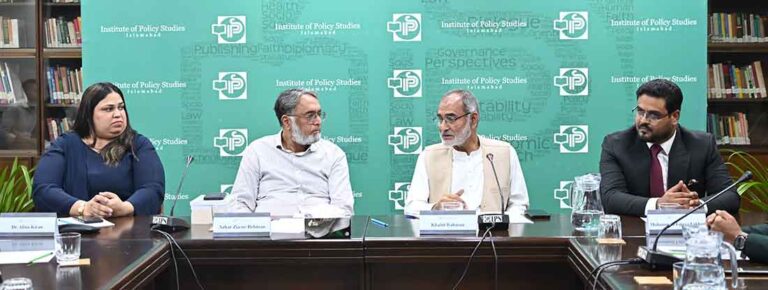
  • Responsible AI Governance and Human Oversight Essential as Pakistan Navigates AI Shift: Experts

    Pakistan needs responsible adoption of Artificial Intelligence (AI), supported by human oversight, institutional preparedness and appropriate policy safeguards, as AI continues to reshape decision-making, education, research, workplaces and public services, experts said at a seminar organized by the Institute of Policy Studies (IPS), Islamabad, on October 1, 2026. Titled “Navigating the AI Shift: Opportunities, Risks, and Policy Directions,” the seminar explored the opportunities emerging from AI while examining concerns related…

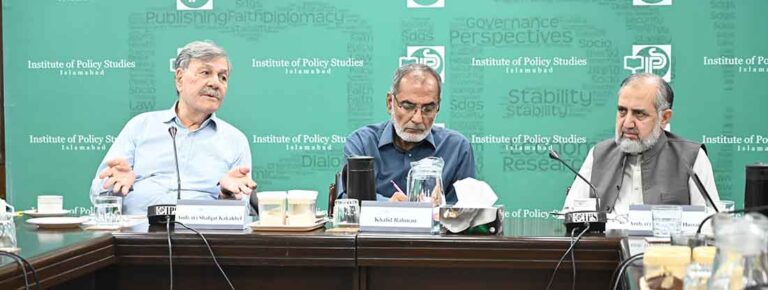
  • Pakistan Needs Diplomacy, Better Water Management to Address Water-Security Challenges: Experts

    Pakistan needs sustained diplomatic engagement to safeguard its rights under the Indus Waters Treaty (IWT), alongside stronger domestic management of water resources to address growing water-security challenges, experts said at a seminar organized by the Institute of Policy Studies (IPS), Islamabad.30 Titled “Beyond The Hague: Securing Pakistan’s Water Rights and Water Security,” the seminar held on October 1 examined the historical, diplomatic, environmental, and policy dimensions of the IWT and…

  • The Silent War Beneath the Strait of Hormuz

    This Insight by Dr Tughral Yamin, “The Silent War Beneath the Strait of Hormuz,” examines the growing importance of autonomous underwater vehicles in the strategic contest over the Strait of Hormuz. It explores Iran’s disputed claims of capturing US underwater vehicles, the evolving role of AUVs in seabed surveillance, mine warfare, intelligence collection and underwater infrastructure monitoring, and the technological challenges of detecting such systems. The analysis also highlights the…

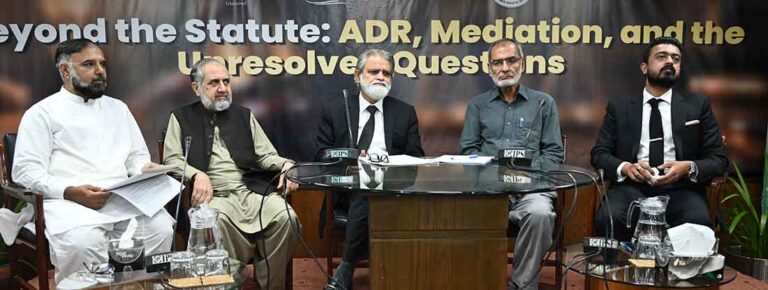
  • Call for Accessible, Culturally Rooted ADR Mechanisms in Pakistan

    Pakistan needs to develop accessible, credible and culturally grounded mechanisms for Alternative Dispute Resolution (ADR) instead of relying solely on legislative frameworks, experts said at a seminar organized by the Institute of Policy Studies (IPS) in collaboration with School of Advocacy and Research (SAR) and Aman Council for Amicable Dispute Resolution on September 29, 2026. The seminar, titled “Beyond the Statute: ADR, Mediation and Unresolved Questions,” examined the institutional, educational…

  • When Two Elephants Meet: What Happens When America and China Sit Down?

    This Insight by Dr. Tughral Yamin examines the September 2026 meeting between US President Donald Trump and Chinese President Xi Jinping, focusing on its implications for global economic and strategic relations. It explores the extension of the US-China trade truce, persistent competition over technology, artificial intelligence, Taiwan, and critical supply chains, as well as differences over Iran and the Strait of Hormuz. The analysis also considers possible trajectories, including managed…

  • Is the United Nations General Assembly Still Relevant?

    This Insight by Dr. Tughral Yamin analyzes the continuing relevance and utility of the United Nations General Assembly amid contemporary global crises. It explores the UNGA’s role as a universal forum for diplomacy, coalition-building, and international dialogue on conflicts, artificial intelligence, climate change, pandemics, and development. The analysis also considers the Assembly’s limitations, particularly the non-binding nature of most resolutions, while highlighting its representative character and role in shaping international…

  • Pakistan-China Joint Boundary Commission

    This Policy Insight by Dr. Tughral Yamin examines the operationalization of the Pakistan-China Boundary Joint Commission (BJC) and its significance for bilateral relations, border management, and regional connectivity. It explains the commission’s legal foundation and distinguishes its mandate from earlier boundary demarcation arrangements. The analysis explores its potential role in facilitating trade, movement, customs coordination, and CPEC-related activities and connectivity, particularly through the Khunjerab crossing. It also considers India’s objections…

Back to top