
Economy

  • Pakistan Economic Insights: First Quarter of Fiscal Year 2025-26

    Pakistan’s economy in the first quarter of fiscal year 2025-26 (July-September 2025) shows signs of regaining, with growth reviewed up to 3.0% for FY25, reinforced by positive commendations from international credit rating agencies (Moody’s, Fitch, S&P) and the successful completion of an IMF review. However, this delicate retrieval faces substantial headwinds from overwhelming monsoon floods, which have harshly impacted agriculture, caused inflationary burdens, and stressed fiscal and external accounts. Crucial…

  • Pakistan Economic Insights (July-August 2025)

    Pakistan’s economy in the first two months of fiscal year 2025-26 (July-August 2025) displayed a mixed outlook, characterized by cautious confidence following credit rating enhancements but outshined by other noteworthy issues and challenges. Moody’s elevation to Caa1 reflects growth under the IMF program, strengthened by better external cushions and fiscal consolidation. Major segments demonstrate progress: manufacturing, predominantly cement and automobiles, displayed sturdy development, and inflation has toned down meaningfully from…

  • Stability and Sustainability of Islamic Finance

    Based on a lecture held at IPS titled ‘Sustainable Development Aspects of Islamic Finance’, this issue brief discusses that the causes of financial instability in the world today stem from two primary sources: firstly, the nature of financial relationships, and secondly, the inherent volatility of financial capitalism. The document explores various aspects of these factors in detail. Download PDF

  • Revitalizing Waqf for Effective and Sustainable Delivery of Social Protection in Pakistan

    Waqf, property or assets endowed perpetually for the beneficial use of recipients or causes, provides social safety and security in a decentralized way. As such, it is an important non-market institution in the Islamic economics framework. Also, Waqf funds can support a broader range of welfare services compared to Zakat. Still, the potential of Waqf remains substantially unrealized in Pakistan. This policy brief explains the challenges faced in managing Waqf…

  • Making the System of Zakat More Effective and Impactful for Social Protection

    Zakat can be an effective medium for alleviating poverty and distributive justice. However, this requires legislation and governance reforms along with benefiting from technology and public-private partnership. This policy brief looks at the issues that are holding back the system from achieving its full potential and also provides comprehensive and multi-level recommendations along with examples from the systems prevalent in other Muslim countries. Download PDF

  • Sustainable Mini-grid Solutions for Off-grid Electrification in Pakistan

    This policy brief highlights the importance of sustainable mini-grid solutions for off-grid electrification in Pakistan. It discusses the need for renewable energy (RE) mini-grids, emphasizing their cost-effectiveness, reliability, and ability to meet the specific energy needs of the communities. It also addresses the challenges faced in implementing mini-grid projects and explores the economic attractiveness and potential benefits of mini-grids. By focusing on these aspects, Pakistan can unlock the potential of…

  • Pitfalls in Power Sector of Pakistan

    The power sector of Pakistan is entangled in issues that are continuously increasing the circular debt, which in turn impacts the energy affordability of the consumers due to regular price hikes. This report ‘Pitfalls in Power Sector of Pakistan: Accumulation of Circular Debt – Causes, Consequences and Way Forward’ presents a detailed overview of the power sector, the governing policies, tariff structures of the generation facilities, factors contributing to circular…

  • ‘Powering Progress: Investments & Digitization to Overcome Challenges’

    The energy and power sector of Pakistan has been facing issues that hinder the country’s progress towards energy independence. For example, there are problems with capacity charges imposed on independent power producers (IPPs), contributing to the mounting circular debt. There are several problems faced by consumers as well, such as load shedding and high electricity rates due to an outdated transmission and distribution system. Also, the issue of electricity theft…

  • Policy Brief | Policy Dilemmas of Food and Nutrition Security in South Asia

    This brief aims to underline how the regional states of South Asia have been addressing the issue of food and nutrition security. How the “states’ ignorance” is confined to a few dimensions of food security while other areas are less targeted. And how efforts can be redirected to the less focused areas in the formulation and implementation of policies regarding food and nutrition security. Download PDF

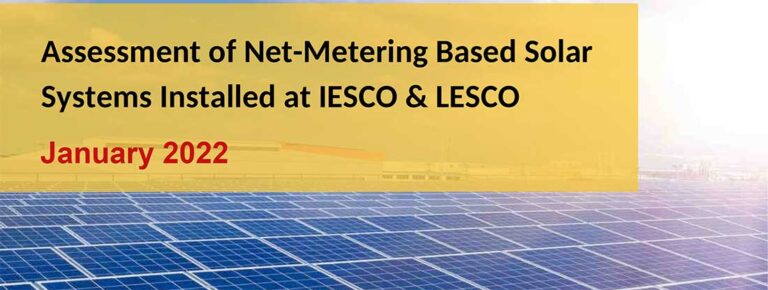
  • Assessment of Net-Metering Based Solar Systems installed at IESCO & LESCO

    Institute of Policy Studies, Islamabad with the support of GIZ Pakistan and Alternative Energy Development Board (AEDB), under the Renewable Energy and Energy Efficiency (REEE) project constituted a study to assess the net-metering process in the country with the main aim to highlight the barriers in procedural, technical and quality assurances. With the active participation from NEPRA, IESCO, LESCO, REAP, SQF and several solar vendors, the report summarizes the quality…

Back to top