
Pakistan Affairs

  • Pakistan’s Economy in Fiscal Year 2025-26: Macroeconomic Stabilization and the Challenge of Sustainable Growth

    This analysis by Zafar ul Hasan Almas, former Joint Chief Economist and Senior Research Associate, IPS; and Dr. Asim Ehsan, Senior Research Officer, IPS, examines Pakistan’s economic performance during FY2025-26, highlighting significant macroeconomic stabilization alongside persistent structural vulnerabilities. The policy insight assesses economic growth, fiscal consolidation, inflation, investment, public debt, and external-sector performance. It notes that while lower inflation, a reduced fiscal deficit, and higher foreign-exchange reserves indicate improved stability,…
  • From Makkah to Istanbul: Turning a Defense Pact into a Strategic Alliance

    This analysis by Tughral Yamin, Senior IPS Associate, examines the Istanbul meeting of Pakistan, Türkiye, and Saudi Arabia and its significance for transforming the Makkah Joint Defense Agreement into a functioning collective security mechanism. The policy insight explores the institutional, military, financial, and diplomatic arrangements needed to make the agreement credible, including command structures, intelligence sharing, joint exercises, and defense-industrial cooperation. It also assesses the Iran-US conflict, the India factor,…

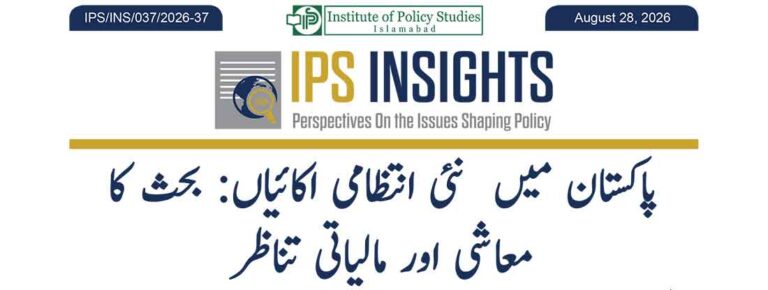
  • New Administrative Units in Pakistan: An Economic and Financial Context of the Debate

    This analysis by Zafar ul Hasan Almas, former Joint Chief Economist and Senior Research Associate, IPS, and Dr. Asim Ehsan, Senior Research Officer, IPS, examines the economic and financial implications of creating new provinces or administrative units in Pakistan. The policy insight focuses on five key considerations: resource-transfer mechanisms, the cost of new governance structures, tax administration and the divisible pool, borrowing and contingent liabilities, and the timing of reform.…

  • From Makkah to Tehran: Can Pakistan Bridge the Gulf’s Deepening Security Divide?

    This analysis by Tughral Yamin, Senior IPS Associate, examines Pakistan’s diplomatic role amid the deepening security divide between Iran and the Gulf states. The insight explores Field Marshal Asim Munir’s Tehran visit, the emerging Makkah Joint Defence Agreement, and the possibility of incorporating Iran into a broader regional security framework. It highlights the challenges posed by the Saudi-Iranian rivalry, the Houthi issue, and US strategic interests, while assessing Pakistan’s unique…

  • Turning Distributed Energy Assets into a National Grid Resource

    This analysis by Faryal Qazi, Research Officer, IPS, examines how Pakistan can transform growing consumer-owned distributed energy resources into a national grid resource. The policy insight explores the increasing role of rooftop solar, battery storage, flexible demand, and electric vehicles in reshaping electricity flows and creating new sources of grid flexibility. It highlights the need for greater system visibility, consumer participation, appropriate market mechanisms, and a more active role for…

  • New Administrative Units in Pakistan: An Economic and Financial Context of the Debate

    This analysis by Zafar ul Hasan Almas, former Joint Chief Economist and Senior Research Associate, IPS, and Dr. Asim Ehsan, Senior Research Officer, IPS, examines the economic and financial implications of creating new provinces or administrative units in Pakistan. The policy insight focuses on five key considerations: resource-transfer mechanisms, the cost of new governance structures, tax administration and the divisible pool, borrowing and contingent liabilities, and the timing of reform.…

  • Twelve Seats: The Real Question in Azad Jammu and Kashmir

    This analysis by Dr. Umair Pervez Khan, member of the IPS Kashmir Working Group, examines the controversy surrounding the twelve seats reserved for Kashmiri refugees in the Azad Jammu and Kashmir Legislative Assembly. The policy insight explores the democratic concerns over their disproportionate electoral influence while highlighting the constitutional and political significance of maintaining representation for displaced Kashmiris. It argues that abolishing the seats would undermine Pakistan’s broader position on…

  • Governance and Political System in Pakistan

    Pakistan is witnessing a broad political and policy debate on governance, with issues such as the creation of new administrative units or provinces, decentralization, local governments, and fundamental structural reforms once again coming to the fore. Against this backdrop, this report, “Governance and Political System in Pakistan,” prepared earlier by the Institute of Policy Studies (IPS) in collaboration with the Institute for Policy Reform and Research (IPRI), remains highly relevant…

  • The Makkah Agreement: A New Strategic Layer in Pakistan’s Security Calculus

    This analysis by Brig (r) Tughral Yamin, Senior IPS Associate, examines the strategic significance of the Makkah Joint Defense Agreement signed by Pakistan, Saudi Arabia, and Türkiye and its implications for Pakistan’s security calculus. The policy insight explores how the trilateral pact adds another layer to Pakistan’s defense posture amid changing regional security dynamics and growing doubts about the reliability of the US security role in the Middle East. It…

  • Beyond New Provinces: Rethinking Pakistan’s Governance Crisis

    The debate over creating new provinces has resurfaced as a proposed remedy for Pakistan’s governance challenges. However, administrative restructuring is only one component of a much broader governance agenda. Effective governance depends on accountable institutions, representative politics, empowered local governments, and the consistent implementation of constitutional principles. This article examines why Pakistan’s governance crisis demands comprehensive political and institutional reforms rather than relying solely on changes to provincial boundaries. Download…

Back to top